
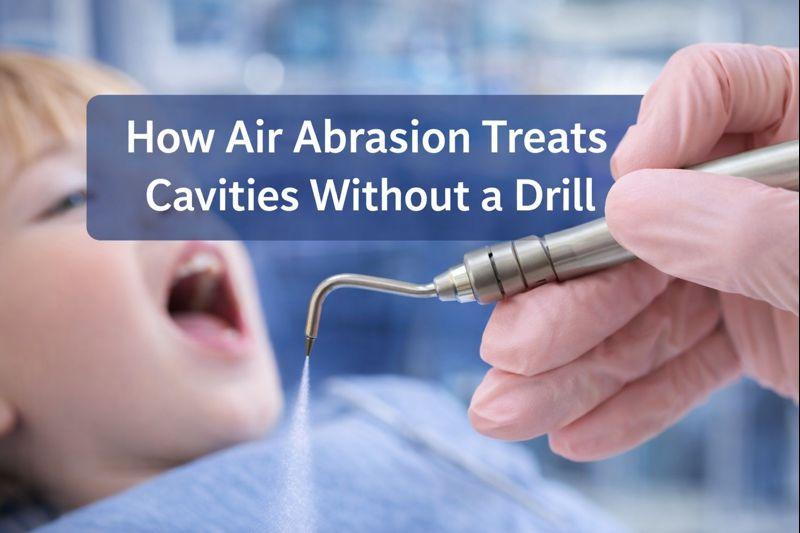
Gentle Cavity Care for Kids: What You Should Know About Air Abrasion
If your child has a cavity but dreads the sound and feeling of the dental drill, you're not alone, and there’s a gentler solution available. At Dental Clinics of Texas in Houston, we use air abrasion to treat early-stage cavities without the need for traditional drilling or uncomfortable tools. This modern, quiet technique removes decay using a fine stream of particles, no noise, no pressure, and often no anesthesia, making it ideal for kids who feel anxious in the dental chair. In this article, you’ll learn exactly how air abrasion works, why it’s safe and effective for children, and when it’s the right option for your family. If you're looking for a drill-free, stress-free cavity treatment from a trusted pediatric dental team in Houston, schedule an appointment with us today.
What Is Air Abrasion in Dentistry?
Air abrasion is a modern dental technique used to remove small areas of tooth decay without using a traditional dental drill. Instead of cutting into the tooth with a spinning metal tip, air abrasion uses a controlled stream of tiny particles to gently wear away decayed material. This method is especially useful in pediatric dentistry because it allows for a quieter, less invasive experience that many children find less intimidating. Compared to a dental drill, air abrasion doesn't involve vibration, pressure, or the loud buzzing sound that often triggers fear in young patients. The process is much gentler and typically does not require numbing injections, which helps ease anxiety and makes for a smoother appointment overall.
The tools involved in air abrasion include a handheld device that emits the particle stream, a suction system to remove debris, and a protective setup to keep the surrounding areas safe. The particles are directed at the decayed area of the tooth and gently clean it away without damaging healthy enamel. From a patient’s perspective, air abrasion feels like a soft stream of air or a light brushing sensation on the tooth. There’s no burning smell, no high-pitched whirring, and no sudden pressure. Children often describe it as ticklish or tingly, making it a far more approachable treatment than the traditional method.
What Particles Are Used in Air Abrasion?
The particles used in air abrasion procedures are typically aluminum oxide, silica, or baking soda. These materials are selected for their ability to effectively remove decay without causing harm to the surrounding healthy tooth structure. Aluminum oxide is the most common particle type. It’s hard enough to remove soft decayed areas, but fine enough not to damage the enamel when used correctly. Silica is a softer option, often used in cases where minimal abrasion is required. Baking soda, being the mildest of the three, is sometimes used for very light cleaning or stain removal.
These particles are biocompatible and safe when used in dental treatments, especially with the protective measures in place. They do not react chemically with the tooth or surrounding tissues and are removed immediately by suction during the procedure. For children, this means there’s no need to worry about swallowing or inhaling the particles. With the right precautions, air abrasion is a safe and gentle technique that fits perfectly into pediatric dental care.
How Air Abrasion Works Step by Step
Air abrasion starts with preparing the area of the mouth that needs treatment. The dentist will isolate the decayed tooth, often using a rubber dam to keep the area dry and protected. The handpiece, which resembles a small airbrush tool, is then positioned close to the cavity. The dentist activates the handpiece, which sends out a stream of fine particles, typically aluminum oxide, through compressed air. These particles are aimed precisely at the decayed area, breaking it down gently. Because the decay is softer than healthy enamel, it is removed quickly and cleanly without harming the rest of the tooth.
As the decay is removed, a high-powered suction device is used to continuously clear away both the used particles and the dislodged decayed material. This keeps the treatment site clean, prevents the patient from inhaling particles, and ensures visibility for the dentist to monitor progress in real time. What makes air abrasion stand out from traditional drilling is the lack of mechanical contact. There’s no cutting, grinding, or friction, just controlled abrasion. This allows for more precise decay removal, less risk of damage to surrounding tooth structure, and a much more comfortable experience for children.
Safety Measures Used During Treatment
Even though air abrasion is minimally invasive, safety is still a top priority, especially for children. During the procedure, protective eyewear is always provided to prevent any stray particles from irritating the eyes. In many cases, a rubber dam is also used. This is a thin sheet placed around the tooth being treated, helping to isolate it and shield nearby gums and teeth. Suction is one of the most important safety features during air abrasion. As the particles strike the decayed tooth surface, the suction device removes them immediately along with any dislodged debris. This prevents the patient from inhaling the particles or having them settle elsewhere in the mouth. The suction system also improves comfort and visibility for the dentist.
When used properly with these precautions, air abrasion is extremely safe for kids. Pediatric dentists are trained in this technique and know how to adjust the pressure, particle type, and angle of delivery for each child’s specific needs. It's a gentle yet effective treatment that reduces anxiety and minimizes physical discomfort, making it an excellent choice for young patients and their parents.
Benefits of Air Abrasion for Treating Cavities
Air abrasion offers several advantages over traditional drilling, especially when treating children. One of the biggest benefits is that it doesn’t create the same physical sensations typically associated with dental work. There’s no high-pitched noise, no vibration, and no pressure against the tooth. That alone helps many young patients feel more at ease in the dental chair. Because air abrasion is gentler and more precise, many procedures can be completed without using anesthesia. For early-stage cavities, it’s often possible to treat the tooth without any numbing at all. This eliminates the fear of needles and prevents that uncomfortable numb feeling afterward.
Another key advantage is how it protects the tooth. Traditional drills sometimes remove parts of the healthy tooth to gain access to the cavity. Air abrasion targets only the decayed area, preserving as much of the natural structure as possible. This leads to stronger long-term results and better outcomes as the child grows. Recovery is typically faster as well. Children treated with air abrasion usually experience less post-treatment sensitivity and can return to normal activities right away. Altogether, the technique reduces stress for both children and parents and helps build trust for future visits.
Why It's Ideal for Children
Air abrasion is one of the best treatment options available for children who struggle with dental fear. The absence of the loud drill sound, pressure, and sharp tools makes the experience much less intimidating. Many kids respond better to the soft air sensation than the buzzing and vibration of traditional methods. As a result, appointments are smoother, and children are less likely to avoid care in the future.
This method is especially helpful for children with special needs or sensory sensitivities. These patients may be triggered by bright lights, loud sounds, or strong physical sensations. Air abrasion eliminates several of those stressors. The technique’s quiet operation, lack of drilling, and gentle touch make it a good fit for children on the autism spectrum or those with sensory processing challenges. It allows your dental team to provide effective care in a way that respects each child’s comfort and needs.
When Is Air Abrasion Used for Cavities?
Air abrasion is most effective when used for treating small, early-stage cavities that haven’t yet reached the deeper layers of the tooth. When tooth decay is caught early, it tends to affect only the outer enamel. In these cases, air abrasion can remove the decayed area cleanly and quickly without damaging healthy tooth structure. Beyond cavity removal, air abrasion is also useful for preparing a tooth for preventive treatments like sealants or bonding. Dentists can use the tool to clean the surface of the tooth and ensure it’s ready for the material to adhere properly. This improves the long-term effectiveness of sealants and other protective treatments.
The same technology can also be used to remove minor stains or surface imperfections before they develop into bigger issues. It’s a gentle way to smooth and clean the tooth surface without the need for any cutting or drilling. These uses make air abrasion a valuable part of preventive and minimally invasive pediatric dental care.
What It Can't Do
While air abrasion is a great tool, it does have some limitations. It’s not effective for treating deep cavities that are close to the tooth’s pulp. When decay has progressed beyond the surface and into the inner layers of the tooth, more advanced tools, like traditional drills or even sedation options, may be necessary to fully remove the damage and protect the tooth. Air abrasion also can’t be used to treat decay between teeth, where access is limited. It’s not suitable for preparing a tooth for crowns, onlays, or large fillings, where a more extensive reshaping of the tooth is required. In those cases, conventional methods are still the most reliable choice.
For these reasons, air abrasion is not a complete replacement for traditional drilling. It’s a valuable tool, but it works best in specific situations, especially in early intervention. A trained pediatric dentist will always assess whether air abrasion is appropriate based on the location, size, and depth of the decay.
What to Expect During Your Child’s Appointment
When your child comes in for air abrasion treatment, the visit is simple and relaxed from start to finish. After a brief check-in and review of your child’s dental history, the dentist will examine the cavity to confirm that air abrasion is the right option. Once the treatment area is confirmed, your child will receive protective eyewear, and a small suction device will be placed in the mouth to keep the area clear and dry. The dentist will then begin using the air abrasion tool, a small, quiet handpiece that directs a controlled stream of particles at the cavity. Most children describe the sensation as a soft burst of air or a light tapping on the tooth. There’s no buzzing, drilling, or heat. The process is very quiet and does not involve any sharp instruments or physical pressure on the tooth.
A typical air abrasion treatment takes about 15 to 30 minutes, depending on how many teeth are being treated and the size of the cavity. In many cases, the procedure is so gentle that children don’t need any numbing at all. After treatment, there’s usually no pain or downtime. Your child can return to school, eat normally, and continue with daily activities without restrictions. If a filling is placed after air abrasion, your dentist may give a few specific care instructions, but most patients recover quickly with no discomfort.
Is Air Abrasion Covered by Dental Insurance?
In many cases, air abrasion is covered under standard dental insurance policies, especially when it is used as part of a medically necessary cavity treatment. Since the method is used to remove decay and prepare a tooth for restoration, it often falls under the same category as traditional fillings or drilling in insurance coding.
However, insurance coverage can vary from plan to plan. Some providers may consider air abrasion a newer or alternative technique and could apply different coverage rules. For this reason, it’s always best to check with your insurance company before your child’s appointment to confirm whether the procedure is included in your benefits.
At Dental Clinics of Texas, we help make this process easier for parents. Our Pediatric team is happy to verify your insurance benefits before treatment begins. Just give us your plan details when you schedule the appointment, and we’ll contact your provider to find out exactly what’s covered. We believe in being transparent about costs and will review all options with you before any procedure takes place.
Air Abrasion vs. Traditional Drilling
When choosing between air abrasion and traditional drilling, it helps to understand how the two methods compare. Here’s a breakdown of the key differences:
Feature | Air Abrasion | Traditional Drill |
Noise Level | Quiet | Loud, whirring sound |
Vibration | Minimal or none | Strong vibration |
Anesthesia Needed | Often not needed | Usually required |
Preserves Tooth | Removes only decay | May remove healthy structure |
Best For | Early cavities, stains, sealants | Deep decay, crowns, large work |
Air abrasion offers a quieter, more comfortable experience for children and is especially effective for early intervention. It allows the dentist to remove decay with greater precision and helps preserve more of the natural tooth. On the other hand, traditional drills are still necessary for deeper cavities or when extensive tooth shaping is needed, such as for crowns or large restorations. At our practice, we always choose the treatment that best fits your child’s needs. Air abrasion is one of the many tools we use to provide safer, gentler care and we’ll always walk you through your options before starting any procedure.
Why Choose Our Houston Dental Clinic for Air Abrasion?
At Dental Clinics of Texas, we specialize in pediatric dental care designed to meet the unique needs of children. Our team includes trained pediatric dentists who understand how to treat cavities gently and effectively, using techniques like air abrasion to make the process as comfortable as possible. Every step we take is centered around making your child’s experience stress-free and successful. We focus not just on treatment, but on creating a safe, welcoming space where children feel supported. Our clinic uses child-friendly tools, language, and pacing to reduce fear and build confidence in young patients. Whether your child is visiting for their first cavity or struggles with past dental anxiety, our team is trained to help them feel calm and cared for.
We also have extensive experience working with children who have dental anxiety, sensory sensitivities, or special needs. By offering alternatives to traditional drilling, such as air abrasion, we help children complete necessary dental care without fear or discomfort. Located in Houston, our office is family-friendly and easy to access. We’ve helped countless families across Houston and surrounding areas get the care they need with less stress. If you’re looking for modern, gentle dental options tailored for kids, we’re here to help.
Book a No-Drill Cavity Consultation Today
If your child needs a cavity treated but you’re concerned about the noise and discomfort of traditional drilling, air abrasion may be the right choice. Our team at Dental Clinics of Texas is ready to help you explore this gentle, effective solution for your child’s dental care.
We invite you to schedule a consultation with our Houston pediatric dental team to learn more about how drill-free dentistry can help your child feel more comfortable and confident during treatment. You can book an appointment online or call our office directly at 832‑427‑1901 to speak with our staff.
We proudly serve families throughout Houston and nearby communities, offering specialized pediatric dental services in a calm and caring environment. Contact us today and give your child a better, stress-free dental experience with air abrasion.