
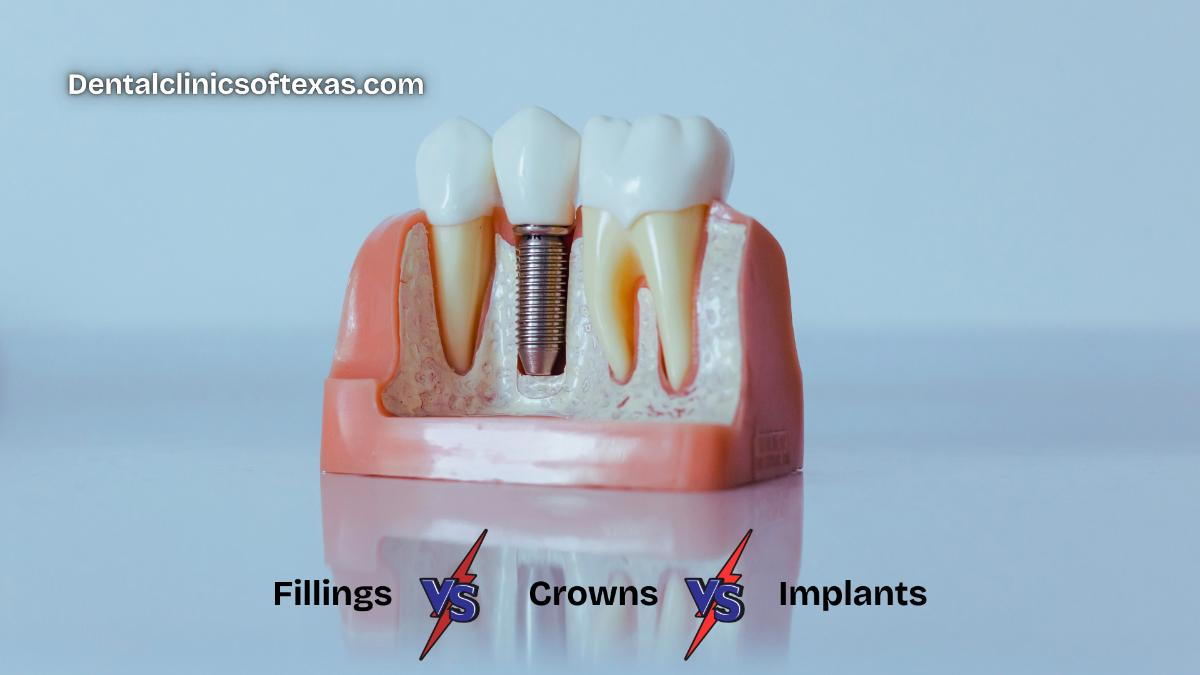
Dental problems come in many forms, from small cavities to severely damaged or missing teeth. Fortunately, there are three common solutions that help restore your teeth: fillings, crowns, and implants. Each treatment has a specific purpose, and knowing which one you need can make a big difference in your dental health and budget.
Understanding the difference between these treatments isn’t just about learning dental terms. It’s about knowing how to make the right choice for your health, time, and finances. When you know what each option does, you’re more prepared to take care of the issue before it becomes more serious or expensive.
At Dental Clinics of Texas in Houston, we guide every patient through the best solution for their specific condition. Our goal is to help you feel informed, confident, and comfortable with every step of your care.
What Is a Dental Filling and When Do You Need One?
A dental filling is one of the most common and effective treatments used to repair a tooth damaged by decay. It helps restore the tooth’s shape and function while preventing further damage.
What Dental Fillings Treat
Fillings are used to fix:
Small to medium cavities caused by tooth decay
Minor chips or wear on a tooth
Early-stage decay that hasn’t reached the deeper layers of the tooth
If left untreated, these small issues can turn into bigger problems that may require more complex procedures like crowns or root canals.
How the Filling Procedure Works
The process is straightforward and usually completed in one visit:
The dentist removes the decayed part of the tooth.
The area is cleaned and disinfected.
A filling material is placed in the space to seal and protect the tooth.
The result is a fully functional tooth that looks and feels natural.
Types of Filling Materials
At Dental Clinics of Texas in Houston, we use materials that are both strong and natural-looking:
Composite resin (tooth-colored and blends well)
Amalgam (durable metal alloy, less common today)
Other options like porcelain or gold, depending on the case
Composite resin is the most popular because it matches the natural color of your teeth and bonds well to the tooth surface.
Why Early Fillings Matter
Treating cavities early with a filling:
Stops the spread of decay
Preserves the healthy part of your tooth
Reduces the chance of needing a crown or root canal later
The earlier a filling is done, the more of your natural tooth you can keep—and the lower the cost of treatment.
Read More: What is a Dental Filling? Types, Costs, Procedure & Aftercare
How Long Do Fillings Last?
A filling can last 5 to 10 years or more, depending on the material used and how well you care for your teeth. Brushing, flossing, and regular dental check-ups help extend the life of your filling.
What Is a Dental Crown and When Is It Recommended?
A dental crown is a protective cap placed over a tooth that is too damaged for a filling. It brings back the tooth’s strength, shape, and natural look. Crowns are designed to cover the entire visible part of the tooth, giving it full support and protection.
When You Might Need a Crown
Dentists usually recommend a crown if:
A tooth has severe decay and can’t be saved with a filling
There’s a crack or fracture in the tooth
You’ve had a root canal, which weakens the tooth
You want to fix a misshaped or discolored tooth for cosmetic reasons
Crowns help save teeth that might otherwise need to be removed.
How the Crown Procedure Works
Getting a crown usually takes two visits:
First Visit:
The dentist removes any decay and shapes the tooth.
An impression is taken to create a custom crown.
A temporary crown is placed to protect your tooth.
Second Visit:
The temporary crown is removed.
Your permanent crown is carefully fitted and cemented in place.
The result is a strong, natural-looking tooth that fits perfectly with your bite.
Types of Crown Materials
Different materials are used depending on the location of the tooth and your needs:
Porcelain or ceramic: Best for front teeth, looks most like natural enamel
Metal or gold: Extremely durable, good for back teeth under heavy chewing
Porcelain fused to metal: Combines strength with a natural look
We help you choose the material that works best for your tooth and budget.
How Crowns Help Your Smile
Crowns do more than just cover damage. They:
Protect the remaining tooth structure
Restore full function, making it easier to chew and speak
Improve appearance, especially for discolored or uneven teeth
This makes crowns a smart long-term solution for many dental problems.
How Long Do Crowns Last?
With proper care, a crown can last 10 to 15 years or more. Brushing, flossing, and regular cleanings help keep the crown, and the tooth underneath, healthy for the long run.
What Is a Dental Implant and When Should You Consider It?
A dental implant is a permanent solution used to replace a missing tooth. It works by placing a small titanium post into the jawbone, which acts like a tooth root. On top of that, a custom crown is attached to give you a natural-looking and fully functional replacement tooth.
When Implants Are Needed
Dental implants are recommended when:
You have lost a tooth due to injury, decay, or gum disease
A tooth is too damaged to save, even with a crown or root canal
You want a long-term alternative to bridges or dentures
Implants are used for single teeth, multiple teeth, or even full-mouth replacements.
How the Implant Procedure Works
The process is done in several steps, but it's simpler than most people expect:
Consultation and Exam
X-rays are taken to check bone health and plan the placement.
Surgical Placement
A small titanium post is placed into the jawbone where the tooth is missing.
This acts as a new root for the replacement tooth.
Healing Period
Over the next few months, the implant bonds with your bone in a process called osseointegration.
A temporary crown may be placed during this time.
Final Crown Placement
Once healing is complete, a permanent crown is attached to the implant.
The new tooth looks and works just like a natural one.
What to Expect During Healing
Most patients feel back to normal within a few days after surgery. Complete healing may take 3 to 6 months, depending on your health and the location of the implant.
We guide you through every step and make sure you stay comfortable throughout the process.
Why Dental Implants Are a Long-Term Solution
Dental implants offer several long-term benefits:
They prevent bone loss, which happens when a tooth is missing
They don’t move or shift, unlike dentures or bridges
They look, feel, and function like real teeth
They protect nearby teeth by standing on their own (no need to anchor to other teeth)
When placed properly and cared for, implants can last 20 years or more.
What About Cost and Payment Options?
Implants usually cost more upfront than fillings or crowns, but they are often the most cost-effective over time due to their durability. At Dental Clinics of Texas in Houston, we offer:
Flexible payment plans
Insurance support
Help navigating Medicaid or other financing options
Our team works with you to make sure your care is affordable and fits your needs.
Fillings vs Crowns vs Implants — Quick Comparison
If you're unsure which treatment fits your situation, this side-by-side comparison can help. Each solution is used for different types of dental issues, and the choice depends on the condition of your tooth, your goals, and your budget.
Feature | Dental Filling | Dental Crown | Dental Implant |
What It Treats | Small cavities, minor chips | Large cavities, cracked or weakened teeth | Missing teeth or teeth that cannot be saved |
Procedure Time | 1 short visit | 2 visits | 3–6 months (multi-step) |
Cost Range (Houston) | $100–$300 | $800–$1,500 | $3,000–$5,000+ (varies by case) |
Lifespan | 5–10 years | 10–15 years or more | 20+ years or lifetime with care |
Recovery Time | Same day | 1–2 days | Few days for surgery, several months to heal |
How to Know Which Treatment Is Right for You
Choosing between a filling, crown, or implant isn’t just about preference — it depends on the condition of your tooth, your overall dental health, and what you want long-term.
Why Dental Exams and X-Rays Matter
Before any treatment, a dentist needs to look below the surface. That’s why we perform a full dental exam and often take X-rays. These show us:
How deep the decay goes
Whether the root or bone is affected
If a tooth can be saved or needs to be replaced
You can’t see everything just by looking in the mirror. That’s why professional exams are key.
What Factors Should You Consider?
Every patient is different, but these are the main things to think about:
Severity of tooth damage
Your budget and insurance coverage
Your health and healing ability
How long you want the solution to last
Cosmetic goals (if appearance is a concern)
A small cavity can often be fixed with a filling. A broken or decayed tooth might need a crown. And if the tooth is gone or beyond repair, an implant could be the best choice.
How We Help You Decide at Dental Clinics of Texas
We don’t believe in one-size-fits-all treatment. Our Houston dental team takes the time to:
Explain every option clearly
Show you images of your teeth and X-rays
Answer your questions honestly
Offer cost breakdowns and payment solutions
We’re here to help you make a smart decision, not to pressure you into one.
Why Early Diagnosis Makes a Difference
Waiting often makes the problem worse. What could’ve been fixed with a filling might later require a crown. A cracked tooth that’s left untreated might end up needing an extraction. That’s why early visits and regular checkups can save your teeth and your money.
Why Choose Dental Clinics of Texas in Houston
We provide trusted, affordable dental care in Houston with a bilingual team, same-day availability, and a patient-first approach. Whether you need a simple filling or a full dental implant, we’re here to make your treatment clear, comfortable, and cost-effective.
Bilingual care in English and Spanish
Same-day appointments and walk-ins welcome
Friendly, experienced team in all types of dental restorations
Most insurance accepted, including Medicaid
Free consultations to help you explore your options with confidence
Conclusion: Book Your Consultation Today
If you’re unsure whether you need a filling, crown, or implant, the first step is getting expert guidance. Our team at Dental Clinics of Texas in Houston is here to help you make the right choice for your smile, your health, and your budget. We take the time to explain every option in plain language, answer your questions clearly, and recommend only what’s truly needed. From diagnosis to treatment, we guide you every step of the way with care you can trust. Book your free consultation today and take the first step toward a healthier, more confident smile that lasts.